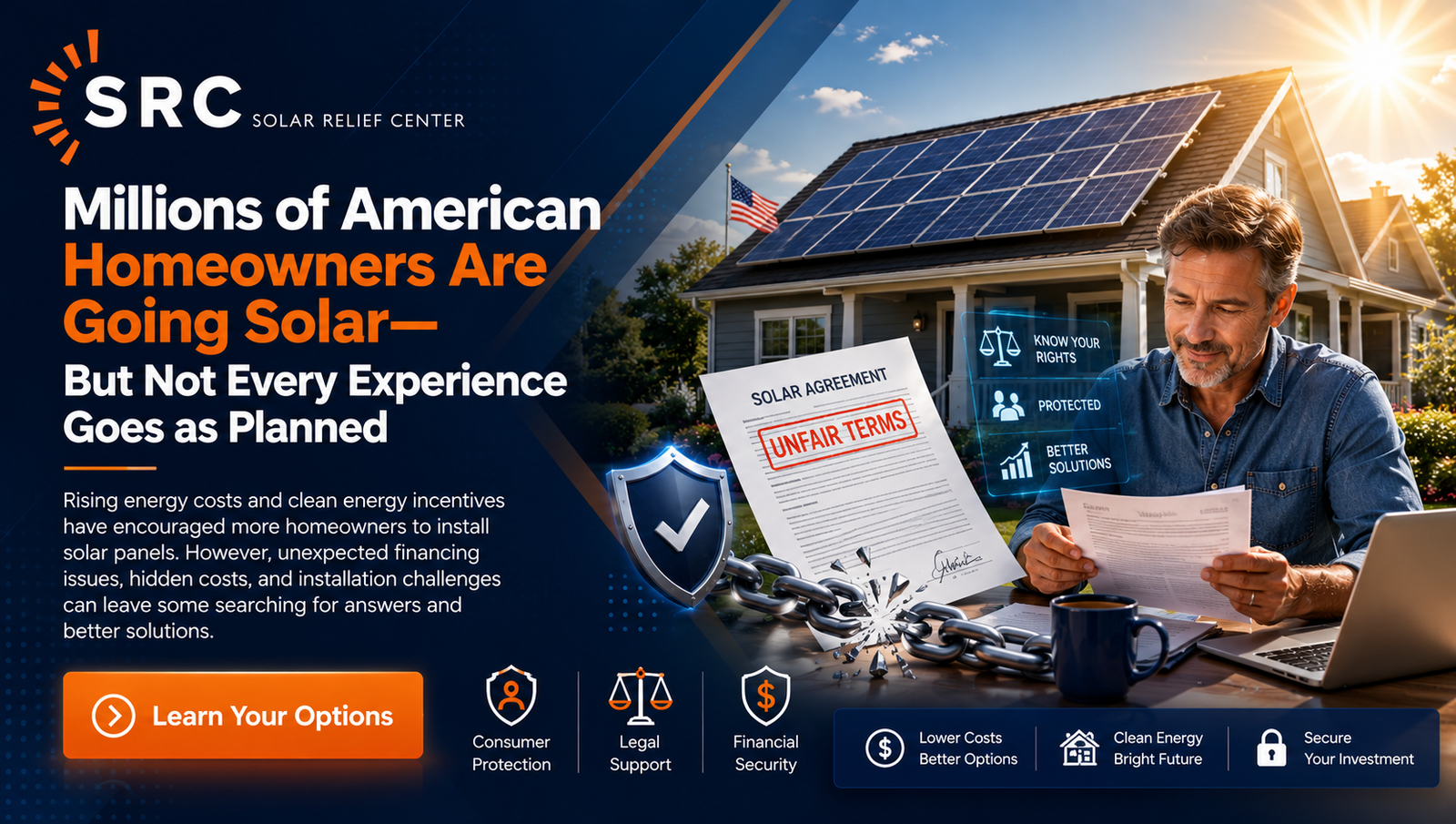





Solar energy has become one of the fastest-growing home investments in the United States. Rising electricity costs, environmental awareness, and government incentives have encouraged millions of homeowners to install rooftop solar systems. While many households enjoy long-term savings, not every solar purchase delivers the promised results.
Some homeowners discover unexpected costs, financing complications, installation delays, or performance issues months after signing an agreement. In these situations, understanding your rights and exploring available solutions can make a significant difference.
Why Some Homeowners Regret Their Solar Purchase
Solar technology itself is not the problem. The challenge often arises from the sales process, financing terms, or unrealistic expectations created before the contract was signed.
Common concerns may include:
- Monthly payments higher than anticipated
- Savings that don’t match original projections
- Delayed or incomplete installations
- Equipment that fails to perform efficiently
- Unexpected maintenance responsibilities
- Difficulty selling a home with an existing solar agreement
Every situation is different, which is why homeowners should carefully evaluate their options before making financial decisions.
Understanding Solar Contracts
A solar agreement is a legally binding document that outlines the responsibilities of both the homeowner and the solar provider. Depending on the arrangement, contracts may involve:
- Direct purchases
- Financing agreements
- Solar leases
- Power purchase agreements (PPAs)
Each option carries different financial obligations, ownership rights, and long-term commitments. Reading every section carefully before signing is essential.
Warning Signs That Deserve Attention
Not every disappointing experience indicates legal wrongdoing, but certain situations may warrant closer review.
Examples include:
- Important contract terms were not clearly explained.
- Verbal promises differ from the written agreement.
- Costs continue increasing despite expected savings.
- Installation quality does not meet professional standards.
- Financing details were misunderstood during the sales process.
- Questions remain unanswered after installation.
Recognizing these concerns early can help homeowners make informed decisions about the next steps.
Consumer Protection Matters
Federal and state consumer protection laws exist to help ensure businesses communicate honestly with customers. If important information was withheld or presented inaccurately during the sales process, homeowners may have legal rights worth understanding.
Consumer protection is designed to encourage transparency, fair business practices, and informed decision-making.
Practical Steps Before Taking Action
If you’re concerned about your solar agreement, consider the following approach:
- Gather all documents related to your purchase.
- Review financing paperwork and payment schedules.
- Save emails, text messages, advertisements, and sales materials.
- Compare written contract terms with what was originally promised.
- Document any system performance issues.
- Seek professional guidance before making major financial decisions.
Keeping organized records can simplify future discussions with financial or legal professionals.
Can Contracts Be Reviewed?
Many homeowners assume that once a contract is signed, nothing can be done. In reality, every agreement is unique.
A professional contract review can help identify:
- Financing obligations
- Potential contractual concerns
- Consumer rights
- Available legal or financial options
- Possible dispute resolution methods
The outcome depends entirely on the specific facts of each case.
Choosing Professional Assistance
If professional help becomes necessary, look for organizations that value:
- Clear communication
- Transparent pricing
- Experience with consumer-related matters
- Honest case evaluations
- Ethical business practices
- Personalized guidance
Avoid anyone who guarantees specific legal outcomes before reviewing your documents.
Final Thoughts
Solar energy continues to offer tremendous value for many homeowners, but every investment should be built on transparency and informed decision-making. If your experience has not matched your expectations, taking time to understand your agreement and your consumer rights is a responsible first step.
The best solutions begin with accurate information, careful documentation, and guidance tailored to your individual situation. By approaching the process thoughtfully, homeowners can make informed decisions that protect both their financial future and their peace of mind.