


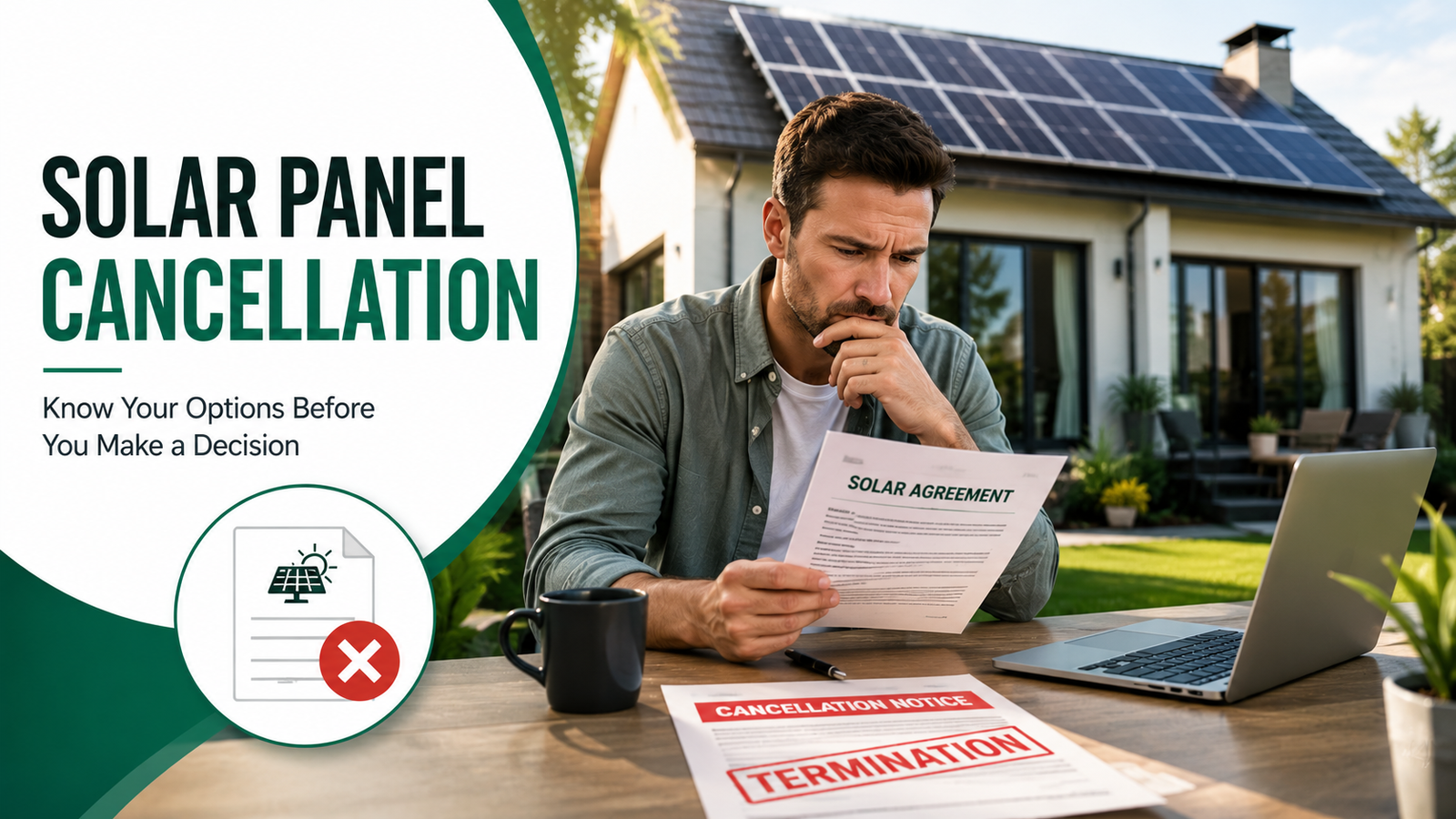



Going solar is often presented as a long-term investment, but circumstances can change. A homeowner may move, experience financial difficulties, discover unexpected costs, or simply realize that their solar agreement no longer fits their needs. In such situations, understanding the solar cancellation process is essential.
Can You Cancel a Solar Agreement?
The answer depends on the type of agreement you signed and the terms included in your contract. Solar purchases, leases, and power purchase agreements (PPAs) can have very different cancellation rules.
Some contracts may provide a short cancellation or cooling-off period, while others may include specific termination conditions, fees, or transfer requirements. That is why homeowners should review the agreement carefully before taking any action.
Common Reasons for Solar Cancellation
There are several reasons a homeowner may consider ending a solar arrangement:
- The homeowner is planning to sell the property.
- The expected savings are lower than anticipated.
- Monthly payments have become difficult to manage.
- The solar system has not performed as expected.
- The homeowner discovered unfavorable contract terms.
- Financing or installation arrangements changed.
- The property is no longer suitable for the solar system.
Whatever the reason, acting quickly can make the process easier, particularly when the contract contains specific deadlines or notice requirements.
Review Your Solar Contract First
Before requesting cancellation, examine the agreement from beginning to end. Pay particular attention to sections covering:
Cancellation rights: Determine whether the agreement allows cancellation and whether a specific timeframe applies.
Termination fees: Some agreements may impose charges when a customer ends the contract early.
Financing terms: A financed solar purchase may involve a separate loan agreement, meaning cancelling installation does not necessarily cancel the financing obligation.
Equipment ownership: Find out who owns the panels and related equipment. Ownership can significantly affect what happens after cancellation.
Property transfer: If you are selling your home, the agreement may require the buyer to assume the solar contract rather than allowing simple cancellation.
Solar Lease vs. Solar Purchase vs. PPA
Not every solar arrangement works the same way.
With a solar purchase, the homeowner generally owns the system, either by paying upfront or through financing. Cancellation may therefore involve the purchase or financing agreement rather than a conventional service contract.
With a solar lease, a third-party company typically owns the equipment while the homeowner makes regular payments for using the system. Ending the lease early may involve contractual requirements or fees.
A Power Purchase Agreement (PPA) is different again. Under a PPA, the homeowner typically purchases the electricity produced by the system at an agreed rate rather than owning the equipment itself.
Because these arrangements have different legal and financial structures, homeowners should avoid assuming that a cancellation policy from one type of solar agreement applies to another.
What Happens After You Request Cancellation?
A cancellation request does not always mean the agreement ends immediately. Depending on the stage of the project, several outcomes may be possible.
If installation has not started, the process may be relatively straightforward if the contract provides a cancellation window. If equipment has already been ordered or installed, additional contractual obligations may apply.
For homeowners who are selling their property, another option may be transferring the agreement to the buyer. Whether this is possible depends on the provider and the terms of the contract.
The key is to obtain confirmation in writing. Keep copies of your cancellation request, contract, correspondence, invoices, and any confirmation you receive.
Don’t Ignore the Financial Side
Solar cancellation can have financial consequences, so it is important to calculate the potential cost before making a final decision.
Consider:
- Remaining loan or lease payments
- Early termination charges
- Equipment removal costs
- Possible roof repair requirements
- Transfer-related expenses
- Tax or incentive implications
- Outstanding balances
A cancellation that appears simple at first may have long-term financial implications. Reviewing the numbers before signing anything can help prevent an expensive surprise.
Get Professional Advice When Necessary
If the agreement is complicated, the cancellation fee is substantial, or you believe the contract was misrepresented, professional advice may be worthwhile.
A qualified attorney or consumer-protection professional can help you understand your rights and contractual obligations based on the laws applicable to your location.
The goal is not simply to cancel a solar agreement—it is to understand the consequences and choose the option that best protects your financial interests.
Final Thoughts
Solar cancellation is not a one-size-fits-all process. The right approach depends on your contract, the type of solar arrangement, the installation stage, and your personal circumstances.
Before taking action, review the agreement, understand any potential costs, communicate with the solar provider in writing, and keep detailed records. Taking a careful approach can make the cancellation process more predictable and help you avoid unnecessary financial complications.