






Learn the basics of debt, how to manage it wisely, reduce financial stress, and build a stronger financial future with smart debt management strategies.
Understanding Debt: A Guide to Smarter Financial Decisions
Debt is a common part of modern financial life. Whether it is used for education, buying a home, starting a business, or handling emergencies, debt can help people achieve important goals when managed responsibly. However, poor debt management can lead to financial stress and long-term financial challenges.
Understanding how debt works is the first step toward building healthier financial habits and achieving financial stability.
What Is Debt?
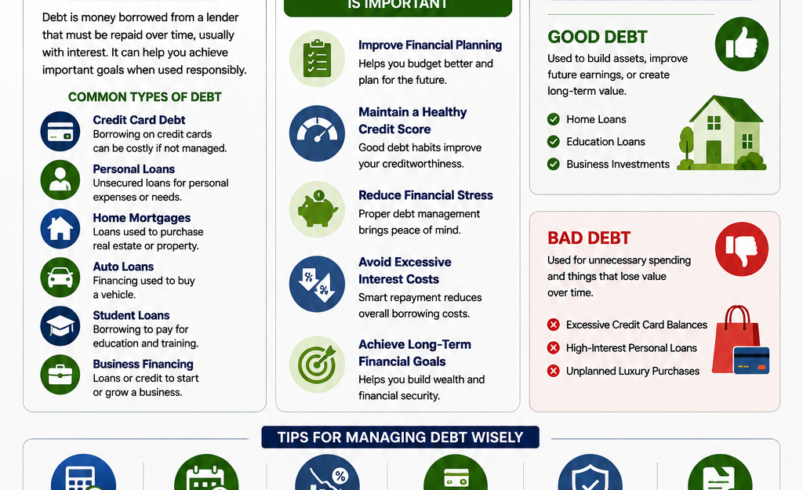
Debt is money borrowed from a lender that must be repaid over time, usually with interest. Individuals and businesses use debt to finance important purchases or investments that may not be affordable upfront.
Common Types of Debt Include:
- Credit card debt
- Personal loans
- Home mortgages
- Auto loans
- Student loans
- Business financing
When used wisely, debt can support growth and financial progress.
Why Understanding Debt Is Important
Managing debt properly helps individuals maintain financial stability and avoid unnecessary financial pressure.
Smart Debt Management Helps You:
- Improve financial planning
- Maintain a healthy credit score
- Reduce financial stress
- Avoid excessive interest costs
- Achieve long-term financial goals
Learning how to balance borrowing and repayment creates stronger financial confidence.
Good Debt vs Bad Debt
Good Debt
Good debt is used to create future value or financial growth, such as:
- Home loans
- Education loans
- Business investments
Bad Debt
Bad debt usually involves high-interest borrowing for unnecessary spending, including:
- Excessive credit card balances
- High-interest personal loans
- Unplanned luxury purchases
Understanding the difference helps people make smarter financial decisions.
Tips for Managing Debt Wisely
Create a Budget
Track your income and expenses to understand your financial situation clearly.
Pay Bills on Time
Timely payments help improve your credit score and avoid penalties.
Reduce High-Interest Debt
Focus on paying off expensive debt first to reduce long-term costs.
Avoid Unnecessary Borrowing
Borrow only when necessary and within affordable limits.
Build Emergency Savings
Savings can help reduce dependence on loans during emergencies.
Final Thoughts
Debt is not always negative — when managed responsibly, it can be a powerful financial tool. The key is understanding how borrowing works, making informed decisions, and maintaining healthy repayment habits.
By managing debt wisely, individuals can reduce financial stress, improve financial security, and create a stronger future.

